
How to choose the perfect watermelon
This is a question that our customers ask us very often. The short answer unfortunately is – “you can’t”.
Unfortunately, once the watermelon is picked it is much more difficult to judge whether it is unripe, ripe or overripe. There are many false claims floating around online about techniques for selecting the “perfect watermelon”. The truth is that we also cannot guarantee that each of our fruits will be of good quality. This is our most important goal – that the maximum percentage of them taste great.
In this article, we will look at the different methods of evaluating watermelon, as well as their effectiveness.
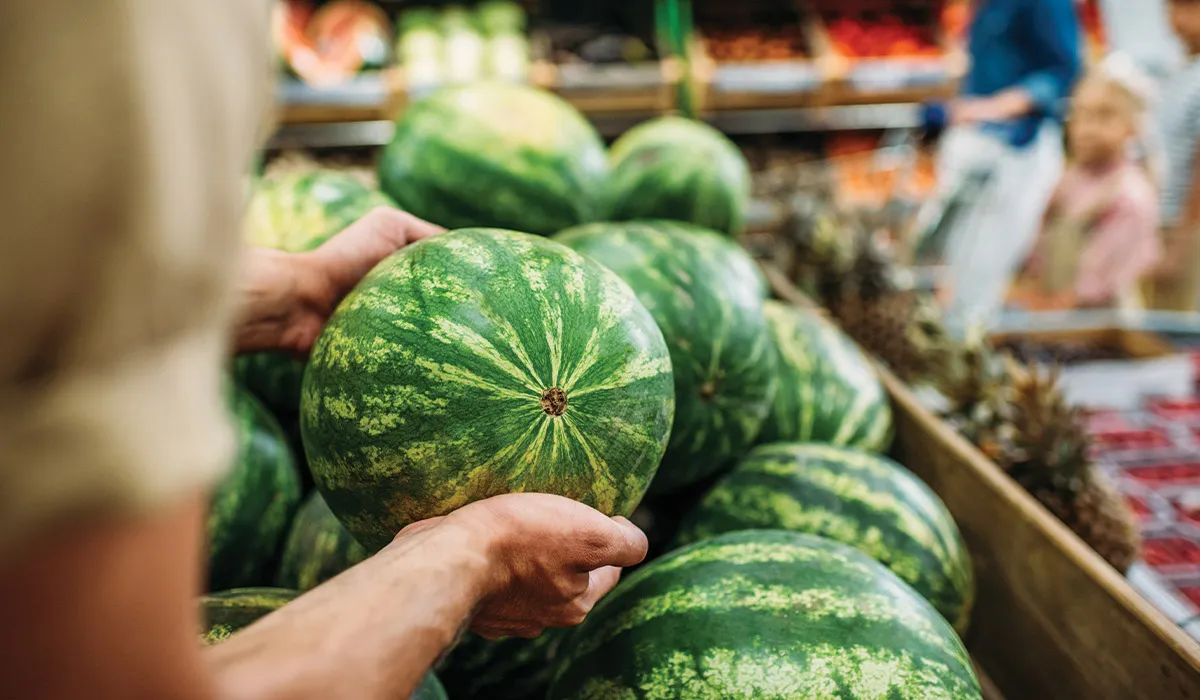
Visual signs
First of all, we should note that different varieties of watermelons not only have a different appearance, but also change their appearance in the process of ripening. That is, it all depends on the variety. Within a variety, watermelon pickers can visually distinguish watermelons that are very unripe or very overripe, but it would be very difficult for buyers to do so.
Instead, we recommend that you inspect the watermelon for mechanical damage, such as pinched areas and cracks in the rind. These mechanical damages are not a problem in the first days after picking the watermelon, but can cause premature spoilage of the fruit during longer storage.
There are no visible signs that reliably indicate a watermelon’s sweetness, crispness or juiciness. We have heard all kinds of myths about this.
Tapping and acoustic clues
Tapping a watermelon can reveal information about its interior, but few people know how to interpret the sound. Once again, the variety is the most important factor. Size, shape, rind thickness and internal structure all affect the sound a watermelon makes.
Hold your ear close to the watermelon as you tap it to hear its tone. Knowing the variety helps you recognise the sound of a ripe fruit rather than an overripe one.
In general:
- A higher-pitched sound that lasts longer indicates a uniform internal density, which can mean the watermelon is either unripe or ripe.
- If the watermelon sounds “hollow”, with a lower tone that is short, then the density in the core is lower, which can mean that it is overripe or sometimes that it just has a hollow in the middle.
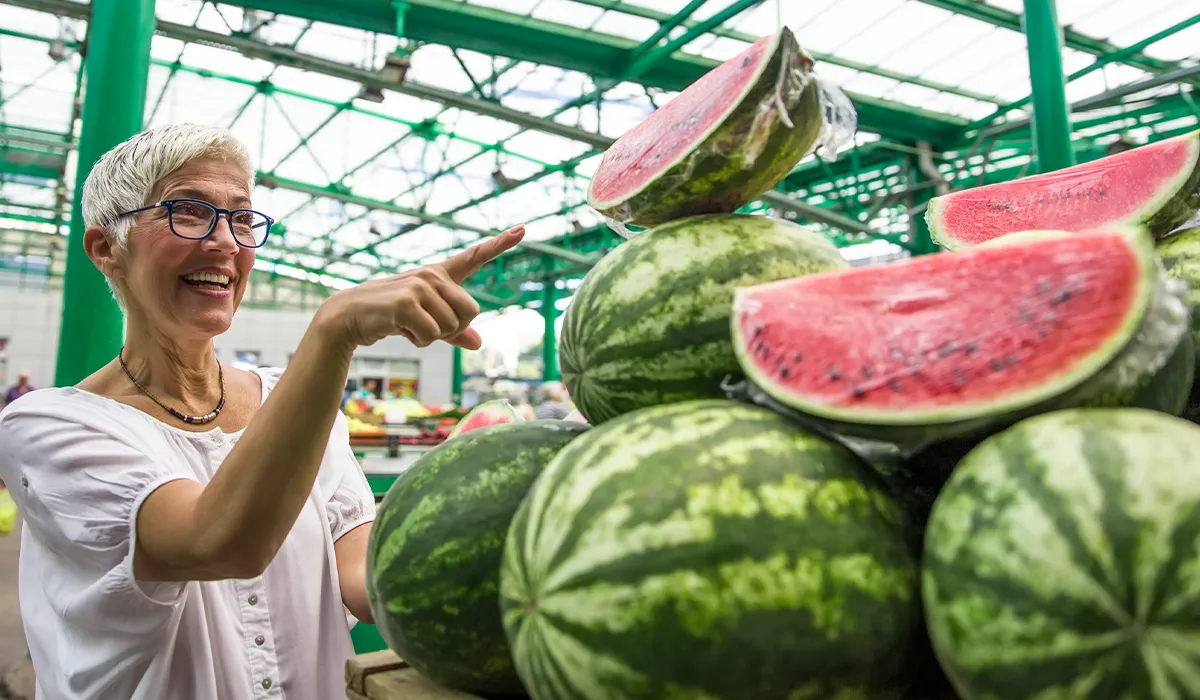
Which watermelons do you prefer? At YanchevFarm, we offer three types: seedless watermelons, seeded watermelons and yellow seedless watermelons with a slightly different but equally wonderful taste. They are grown with love and attention to provide you with all the qualities that a perfect watermelon should have. Contact us to place an order!